

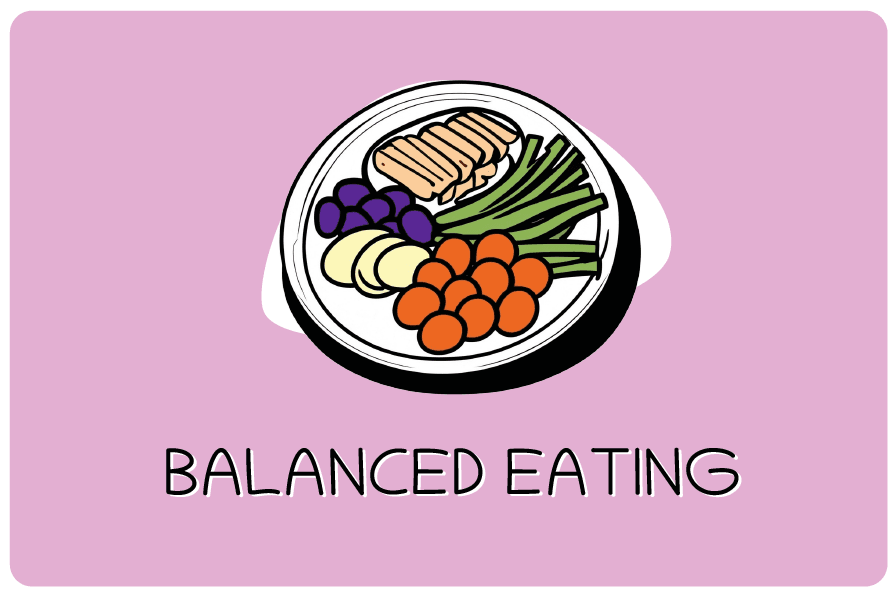
If you've been diagnosed with gestational diabetes, the phrase "balanced plate" suddenly becomes more than just a nutrition class buzzword. It becomes your daily blueprint. Your tiny-but-mighty tool. And your secret weapon in keeping blood sugar steady while still enjoying food.
But what exactly does a balanced plate look like with gestational diabetes (GD)? And more importantly: how do you build one without second-guessing every bite?
I’ve got you, mama. Here's a visual guide that makes it easier. (No food scale required.)
Picture a regular dinner plate. Now divide it mentally into sections:
Half the plate: Non-starchy vegetables
One quarter: Lean protein
One quarter: Complex carbohydrates (your carefully measured carb portion)
Add healthy fats: Think of these as bonus sprinkles to enhance flavor and blood sugar control

This approach is also known as the Plate Method — a simple visual strategy widely recommended for managing blood sugar, especially during gestational diabetes. It takes the guesswork out of mealtime and helps you stay in balance without counting every gram.
These are your blood sugar besties. Veggies like:
Leafy greens (spinach, kale, arugula)
Broccoli
Zucchini
Bell peppers
Cauliflower
Asparagus
Green beans
Brussels sprouts
Cucumber
Mushrooms
They’re low in carbs, high in fiber, and help slow digestion—which = smoother glucose levels.
Roast them, steam them, sauté them in olive oil, or eat them raw with dip. The goal is volume and variety.
Protein helps you stay full longer and keeps post-meal blood sugar from rising too fast. Try:
Grilled chicken or turkey
Tofu or tempeh
Fish (like salmon, tuna, cod)
Shrimp
Eggs
Cottage cheese or Greek yogurt (plain)
Lean beef or pork
Need a quick guide? A portion of protein is about the size of your palm.
This is your carb allowance—choose wisely and pair with the above to minimize spikes. Good options:
Brown rice or quinoa
Sweet potato (keep skin on)
Whole grain bread or pasta
Legumes like lentils or black beans
Bulgur or farro
Oats (steel-cut or rolled, not instant)
Corn (in small amounts)
Stick to about 1/2 cup cooked or one small slice per meal (unless you test and see your body handles more).
Fats help slow down digestion and make meals more satisfying. Examples:
Avocado
Nuts or seeds
Olive oil
Nut butters
A sprinkle of cheese
Even a spoonful of guacamole on the side can make a difference!
Eat in this order: Veggies → protein → carbs (it matters!)
Watch your portions, but don’t obsess.
Test, tweak, repeat. Everyone reacts differently.
Pair snacks, too. Never eat carbs alone.
Ideally, aim to use the plate method for all your main meals—breakfast, lunch, and dinner. Even snacks can loosely follow the same concept: a combo of protein + fiber + a small portion of carbs. The more consistently you build balanced meals, the more stable your blood sugar tends to stay.
To make building your balanced plate even easier, here are some real-life meal ideas putting all the pieces together:
Grilled chicken + roasted broccoli + quinoa + avocado slices
A simple, protein-packed meal with fiber-rich veggies and healthy fats to keep your blood sugar steady.
Baked salmon + steamed asparagus + sweet potato (small portion) + olive oil drizzle
Omega-3-rich fish and nutrient-packed veggies paired with a measured carb portion and healthy fats.
Scrambled eggs + sautéed spinach + whole grain toast + a few walnuts
A quick, balanced breakfast or lunch with protein, greens, complex carbs, and crunchy fats.
Shrimp sautéed with garlic + steamed green beans + small serving of brown rice + sliced avocado
A light but filling meal packed with protein, fiber, and healthy fats.
Lentil salad with cucumbers, bell peppers, feta cheese, and a drizzle of lemon-olive oil dressing
Plant-based protein and fiber-rich carbs paired with a creamy, flavorful fat.
Egg muffins loaded with spinach and mushrooms + side of roasted sweet potato wedges + handful of walnuts
Perfect for meal prep — balanced and easy to grab on busy days.
Greek yogurt (plain) topped with a few berries, chopped nuts, and a sprinkle of chia seeds
A great breakfast or snack option combining protein, healthy fats, and low-GI carbs.
Try swapping ingredients based on what you have or prefer — just keep the plate portions in mind. The goal is balance, variety, and enjoyment.
Cravings are part of the ride—especially during pregnancy. And honestly? You don’t have to ignore them or feel guilty. The trick is to start with a balanced plate, then tweak the treat.
Craving pasta? Go for whole grain, then add protein and some fiber-rich veggies to keep things steady. Dreaming of dessert? Have a small portion after a balanced meal (not on an empty stomach), when your blood sugar is already more stable.
Cravings don’t mean failure. They’re just signals. With a little strategy, you can answer them and keep your numbers in check.
This plate method helps:
Prevent blood sugar spikes
Keep you fuller longer
Provide balanced nutrition for you and baby
It’s simple, flexible, and realistic—especially during a time when everything feels a bit overwhelming.
So next time you’re standing in the kitchen wondering what to eat, picture your plate.
And build it like a GD boss. 😉
You don’t have to figure this all out alone. Inside the HIgedi app, mamas are sharing their real meals, balanced plates, and snack wins daily. It’s visual, supportive, and you might just get your next dinner idea there.
1. What is the plate method for gestational diabetes?
The plate method is a simple visual tool to build balanced meals without counting every carb. Fill ½ your plate with non-starchy vegetables, ¼ with lean protein, and ¼ with complex carbs, plus a little healthy fat. This helps keep blood sugar steady throughout the day.
2. Do I need to count carbs if I use the plate method?
Not necessarily, but many women find it helpful—especially when starting out. The plate method helps you eyeball portions visually, while carb counting gives you more precision. Using both together works well for many GD mamas, especially during the learning phase.
3. Can I use the plate method for snacks too?
Absolutely! While portions are smaller, the principle is the same: pair carbs with protein or fat for better blood sugar control. Try apple slices with peanut butter, crackers with cheese, or berries with Greek yogurt.
4. Can I still eat my cultural or comfort foods with gestational diabetes?
Yes! The plate method is flexible and works with any cuisine. Many traditional meals can fit your plan with thoughtful portion adjustments or simple swaps (like brown rice instead of white, or extra vegetables). Test your blood sugar after to see how your body responds, then adjust as needed.
5. How do I know if the plate method is working for me?
Your blood sugar numbers will tell you! Test 1-2 hours after meals to see how your body responds. If your numbers stay within your target range consistently, you're on the right track. If not, adjust your portions or food choices and test again.
6. Can I use the plate method when eating out?
Yes! Use the same visual guide at restaurants: fill half your plate with vegetables or salad, choose a lean protein, and ask for a half portion of carbs or swap for whole grains. Don't be afraid to ask for modifications—and enjoy your meal without guilt!
Get a Free 20-Day Shopping List

Join 6,500+ moms in the HIgedi app sharing real meals, blood sugar results, and judgment-free support.