


If you’re managing gestational diabetes and nearing the end of pregnancy, you might be hearing a lot about dates for labor prep. Dates are said to help soften the cervix and support spontaneous labor—but what about their sugar content?
The good news: yes, you can eat dates with gestational diabetes— you just need to be intentional.
Note: Everyone tolerates food differently. Some people with gestational diabetes do better with dates than others. Try, test, and adjust based on your personal blood sugar response.
Several studies suggest that consuming dates during late pregnancy can lead to more favorable labor outcomes.
Dates are high in natural sugars, fiber, and nutrients, and research suggests that consuming them in the final weeks of pregnancy may:
Help ripen the cervix (making it more favorable for labor)
Potentially shorten the first stage of labor
Decrease the likelihood of needing medical induction or augmentation
One well-known study published in the Journal of Obstetrics and Gynaecology found that women who ate 6 dates per day starting at 36 weeks were more likely to go into labor spontaneously and had a greater cervical dilation upon hospital admission compared to those who didn’t eat dates.
Dates—especially Medjool dates—are naturally sweet and nutrient-rich, but also carb-heavy.
1 Medjool date ≈ 18g of carbohydrates, of which about 16g is sugar
High in fiber, potassium, magnesium, and antioxidants
Moderate glycemic index (due to fiber content)
Compared to other carbohydrate foods, such as dried fruit, breakfast cereals, and plain porridge, dates have a moderate glycaemic index, meaning they raise blood sugar levels more slowly than high GI foods but faster than low GI foods or lower GI options.
While they’re natural, these sugars still count. That’s why balancing them with protein and fat is crucial for anyone on a gestational diabetes-friendly diet.
Planning healthy meals and eating regularly is essential to manage gestational diabetes effectively, and so is monitoring your blood glucose levels, especially when adding dates to your diet.
Here’s how many mamas with GD are incorporating dates strategically into their diet during the last few weeks of pregnancy:
Eating dates with a source of protein or healthy fat (like nut butter, cheese, or Greek yogurt) helps slow the release of glucose into your bloodstream.
Example: 1-2 dates stuffed with natural peanut butter or paired with a handful of almonds.
Begin with 1–2 dates per day and check your blood sugar at the 1 or 2-hour post-meal mark. If your numbers stay in range, you may gradually increase.
Not all bodies react the same. Some people tolerate Medjool dates better than others. Use your glucose monitor as your guide.
Instead of eating all your dates in one sitting, spread them over the day with snacks or meals to reduce glucose spikes.
Quick tips:
Pair dates with a source of protein or healthy fat, such as a handful of nuts or a spoonful of nut butter, to help slow the absorption of sugar.
Limit portion sizes—try 1-2 dates at a time.
Choose whole dates over processed date products, which may contain added sugars.
Remember, combining healthy eating with regular exercise and physical activity can help prevent gaining too much weight during pregnancy, support healthy weight gain, and assist with blood sugar control.
Here are smart, blood sugar-friendly recipes to incorporate dates into your daily routine in the final weeks of pregnancy:
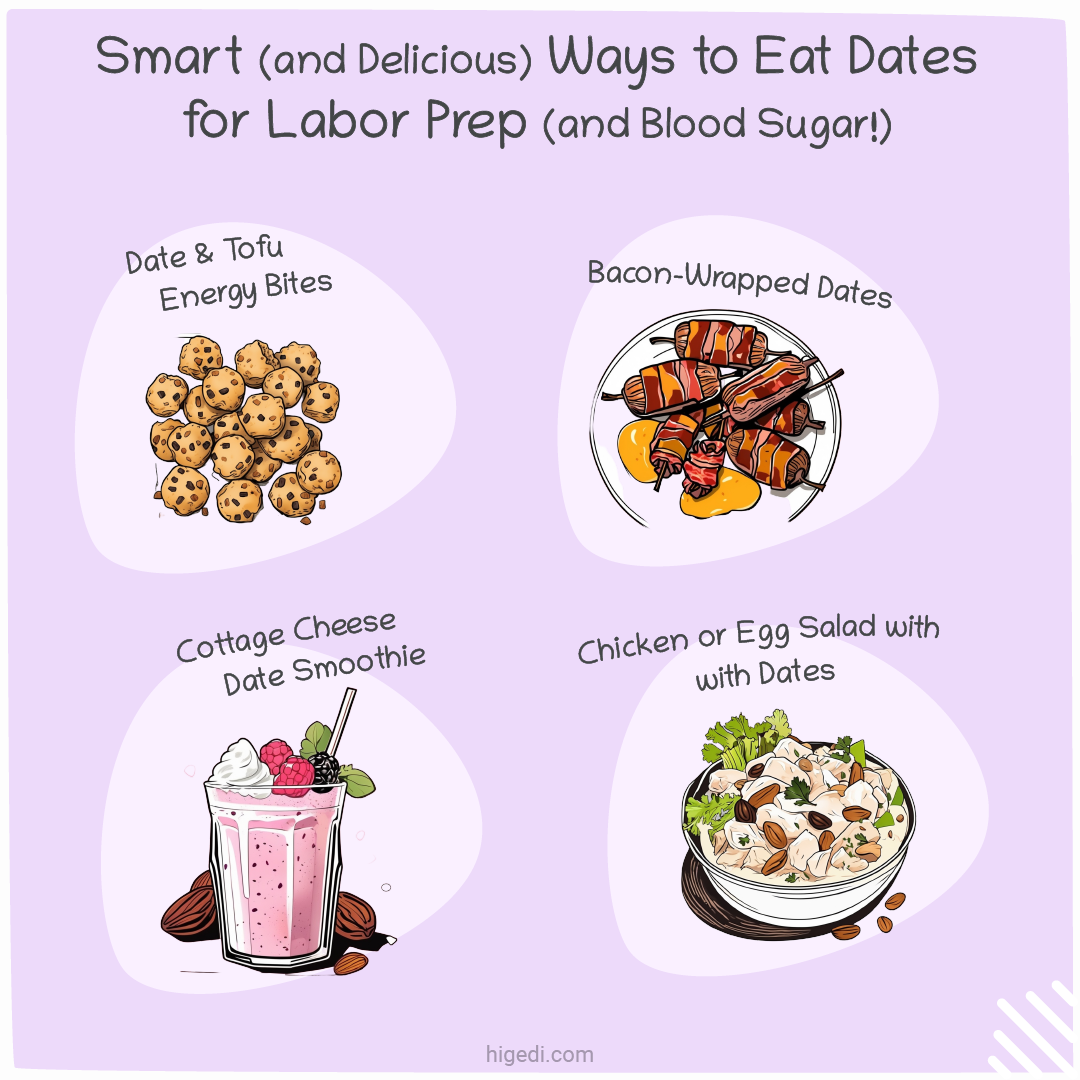
How to make:
Blend soft or silken tofu (about 1 cup, drained well), 8–10 pitted Medjool dates, ¼ cup almond or coconut flour, 2 tbsp nut butter (almond, peanut, or cashew), 1–2 tbsp chia seeds or ground flaxseed, 1 tsp vanilla, and a pinch of salt.
Optional: Add 1–2 tbsp cocoa powder, a handful of sugar-free chocolate chips, a scoop of protein powder, or some crushed nuts.
Blend until smooth, adjust texture with more flour if needed, roll into balls, and chill.
How to make:
Stuff each pitted date with blue cheese or feta (as much as fits).
Wrap with half a slice of bacon and secure with a toothpick.
Bake at 400°F (200°C) for 15–20 minutes, turning once, until bacon is crispy.
How to make:
Blend 1–2 pitted dates with ½ cup cottage cheese, 1 scoop protein powder, ½ cup frozen berries, and (preferably unsweetened or protein-enriched) milk or milk alternative.
Blend until smooth and creamy. Adjust thickness with more milk if needed.
*MORE IDEAS*
Blend 1–2 pitted dates with ice, unsweetened almond milk, protein powder, and a spoonful of nut butter (like almond or peanut). Or, blend dates with ice, a ready-to-drink protein shake (vanilla, chocolate, caramel, or coffee), and nut butter for a quick, creamy, protein-packed shake.
How to make:
Prepare chicken salad, egg salad, or tuna salad as you usually do (with Greek yogurt or mayo, celery, nuts, and herbs).
Add 1–2 finely chopped dates per serving and mix in.
The sweetness balances the savory flavors and adds fiber and texture.
How to make:
Stuff dates with ricotta or cream cheese, wrap with bacon, and bake at 350°F (180°C) for 25–30 minutes until crispy.
How to make:
Stuff dates with almonds and ricotta, place in a baking dish, pour Greek yogurt over the top, and bake at 350°F (180°C) for 20–25 minutes.
How to make:
Mix chopped dates with chopped almonds, ricotta or cream cheese, garlic, spinach, and your favorite seasoning.
Use as a flavorful stuffing for chicken, turkey, pork, or beef—sweet, savory, and protein-rich!
Some people with gestational diabetes have successfully worked 2–6 dates per day into their meals or snacks by balancing them properly. Others start with just 1 per day and increase based on their glucose numbers.
The goal isn’t to spike your sugar—it’s to support labor naturally, while keeping your readings within target range.
If you’re adding dates into your gestational diabetes diet, think of it as a little experiment just for you. Everyone’s body reacts differently, so keeping a close eye on your blood sugar is key. Grab your glucose meter or continuous glucose monitor and check your levels about an hour after enjoying a date or two. If your numbers stay steady, great! If they spike, don’t worry — try pairing your dates with more protein or healthy fat.
Dates are delicious little powerhouses, but they work best when balanced with a healthy diet that supports your gestational diabetes journey. Focus on low glycaemic index foods, plenty of colorful veggies, lean proteins, and healthy fats to keep both you and your baby thriving. Skip the sugary drinks and processed snacks that can send your blood sugar on a rollercoaster ride. Instead, spread your carbs (yes, including dates!) evenly throughout the day—think of it as giving your body steady fuel rather than a sugar rush.
And remember, your healthcare team is there to guide you, helping you plan meals that keep your blood sugar in check and your pregnancy on track. You’ve got this!
Start with small portions, such as one tablespoon or 1-2 dates at a time.
Always pair dates with protein or healthy fats to minimize blood sugar spikes.
Avoid consuming dates on an empty stomach.
Use a continuous glucose monitor or perform blood tests one hour/two hours after eating to assess your body's response.
Consult your healthcare provider before making significant dietary changes, especially if you are on insulin or other medications.
For those with gestational diabetes, dates are not off-limits—but they do require caution. Their carbohydrate load can impact glucose levels, so consuming them in small amounts alongside protein or fat and tracking your post-meal numbers is key to incorporating them safely.
A healthy diet during pregnancy should include important nutrients like folic acid and foods that support heart health. Balanced nutrition provides health benefits for both mother and baby.
As always, be sure to check with your OB or dietitian before adding anything new—especially in those final weeks of pregnancy.
1. How many dates should I eat per day for labor prep if I have gestational diabetes?
Studies recommend 4–6 dates per day for labor preparation starting at 36–37 weeks, but if you have gestational diabetes, it’s best to begin with 1–2 dates at a time. Monitor your blood sugar response carefully and adjust as needed to avoid spikes.
2. What type of dates are best for gestational diabetes and labor prep?
Medjool dates are commonly used for labor prep due to their size and nutritional value, but they are higher in carbohydrates. Deglet Noor dates are smaller and may be easier to incorporate if you’re concerned about blood sugar control.
3. When should I start eating dates during pregnancy?
You can start eating dates around 36–37 weeks of pregnancy for labor prep. Always consult your healthcare provider to ensure this is safe and appropriate for your individual health needs.
4. Can dates induce labor?
Dates do not directly induce labor, but they may help ripen the cervix and influence hormone levels, potentially shortening early labor and increasing the chances of spontaneous labor.
5. Are dates safe to eat if I failed the glucose tolerance test but haven’t been diagnosed with gestational diabetes?
If you are borderline or have risk factors for gestational diabetes, treat dates as a high-carb food. Start with small amounts, monitor your blood sugar response, and consult your healthcare provider for guidance.
6. Can eating dates cause low blood sugar?
Dates are high in natural sugars and typically do not cause low blood sugar (hypoglycemia) when eaten in moderation. However, if you are on insulin or other diabetes medications, coordinate your diet and medication plan with your healthcare provider.
7. How can I balance eating dates with managing weight gain during pregnancy?
Dates are calorie-dense, so portion control is important. Include them as part of a balanced diet rich in low glycemic index foods, lean proteins, and healthy fats, and follow your provider’s advice on exercise and nutrition.
8. When is the best time to eat dates for gestational diabetes?
Eat dates with meals or snacks that contain protein and healthy fats to slow glucose absorption and help prevent blood sugar spikes. Avoid eating dates on an empty stomach.
9. Should I avoid dates if I have high blood pressure during pregnancy?
If you have high blood pressure and gestational diabetes, consult your healthcare provider before adding dates to your diet. Dates have potassium, which can support blood pressure, but individual advice is important.
10. Can dates help with fetal development?
Dates provide nutrients like folic acid, potassium, and antioxidants that support fetal development and overall prenatal health when included as part of a balanced diet.
11. Are dates safe for gestational diabetes?
Dates can be included in your diet if you have gestational diabetes, but portion control and blood sugar monitoring are key. Always consult your healthcare provider before making dietary changes.
Get a Free 20-Day Shopping List

Join 6,500+ moms in the HIgedi app sharing real meals, blood sugar results, and judgment-free support.