

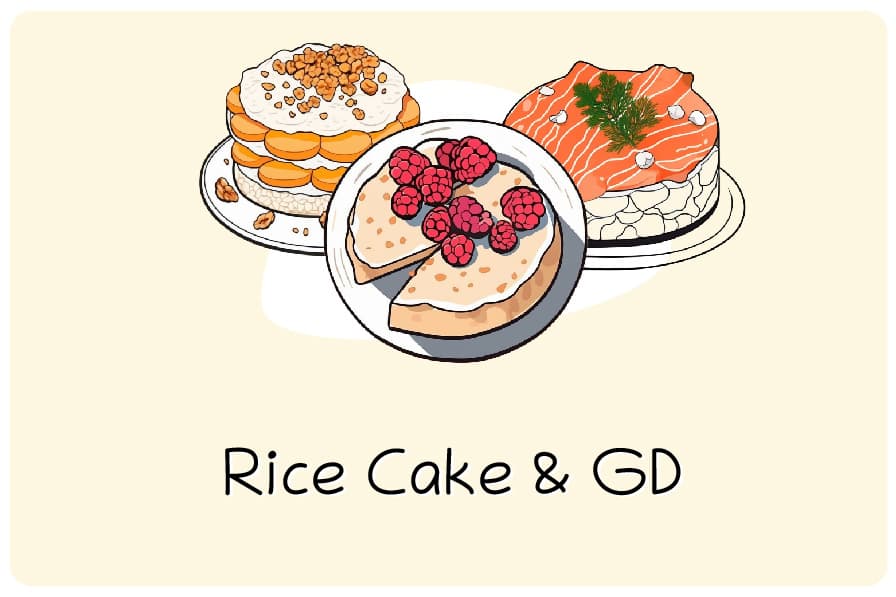
If someone had told me pre-GD that rice cakes would end up in my pantry — and in regular snack rotation — I would’ve politely laughed and walked away with my croissant.
But here we are.
And honestly? When managed right, they’re one of those “humble but helpful” snack options. They’re quick, portable, and most importantly — customizable. Which means you can actually make them satisfying and blood sugar-friendly, even when everything else in your fridge feels like a no-go.
So, let’s break it down: types, toppings, and why rice cakes might just be worth a second look.
Not all rice cakes are created equal. Some are just air and carbs. Some are carby and secretly sweet. What we want is plain, simple, and buildable.
Here’s a quick cheat sheet:
Plain puffed rice cakes – About 7–9g of carbs per piece. Choose unsalted or lightly salted. Think of these as your blank canvas.
Brown rice or multigrain cakes – Slightly more fiber, which can help soften the glucose spike.
Corn cakes – Similar to rice cakes, different texture and taste. Worth a try!
Mini flavored cakes – Usually full of added sugars or weird powders. Tread carefully.
Note: If your snack goal is 15g of carbs or under (which is common), you’re probably aiming for 1 rice cake with toppings — or 2 if you’ve got some solid protein involved.
When you’re managing gestational diabetes, understanding how carbohydrates and the glycaemic index (GI) affect your blood glucose is key. Carbohydrates are your body’s main source of energy, but not all carbs are created equal—especially when it comes to how quickly they raise your blood glucose levels.
The glycaemic index ranks foods based on how fast they increase blood glucose. High GI foods, like white bread or sugary snacks, can cause a rapid spike in glucose levels, which isn’t ideal for gestational diabetes. Low GI foods, such as whole grains, certain fruits, and vegetables, are digested more slowly, leading to a gentler rise in blood glucose.
Rice cakes are often seen as a light snack, but their GI can vary depending on the type. Plain rice cakes made from white rice tend to have a higher GI, while those made from brown rice or whole grains are a better choice for keeping glucose levels steady. One portion (about 2–3 rice cakes) contains roughly 15–20 grams of carbohydrates, making them a manageable base for a snack if you’re mindful of your toppings.
To keep your snack blood sugar-friendly, pair rice cakes with low GI, protein-rich, or healthy fat toppings like nut butter or cheese. This combination helps slow down the absorption of carbohydrates, supporting more stable blood glucose levels. Remember, it’s not just about the rice cakes themselves, but the right balance of foods you add on top that makes all the difference for your diet and diabetes management.
Rice cakes alone? Kind of like eating crunchy air. But pair them with protein and healthy fats, and you’ve got a snack that’s both blood sugar friendly and surprisingly filling.
They’re also an easy way to “build a snack” without needing to cook or commit to a full meal.
Let’s be real — no one really eats plain rice cakes (unless they’re desperate). Here’s how to turn them into satisfying, tasty bites that work for gestational diabetes:

Avocado + Hemp Seeds + Everything Bagel Seasoning
Simple, creamy, with that perfect crunch and flavor hit.
Tuna Salad, Chicken Salad, or Egg Salad (protein powerhouses!)
Here are quick recipes you can whip up:
Tuna Salad
1 can tuna (in water), drained
1 tbsp Greek yogurt or light mayo
1 tsp Dijon mustard
Salt, pepper, and a squeeze of lemon juice to taste
Optional: chopped celery or pickles for crunch
Mix all together, spread on rice cakes, and add cucumber slices or fresh greens on top.
Chicken Salad
1 cup cooked chicken, shredded
2 tbsp Greek yogurt or light mayo
1 tsp curry powder (optional)
Salt and pepper to taste
Optional: chopped apple or grapes for a little sweetness
Combine, spread generously on rice cakes, and top with arugula or spinach.
Egg Salad
2 hard-boiled eggs, chopped
1 tbsp Greek yogurt or light mayo
1 tsp mustard
Salt, pepper, and paprika to taste
Optional: fresh herbs like chives or dill
Mix well, spoon onto rice cakes, and add sliced tomato or avocado for extra yum.
Cottage Cheese + Tomato + Cracked Pepper
Fresh and light with a peppery punch.
Egg Slices + Arugula + Dijon Mustard
Simple, protein-rich, and full of flavor.
Hummus + Cucumber + Feta Crumble
Creamy, crunchy, and tangy — a classic combo.
Ricotta + Roasted Peppers + Pine Nuts + Olive Oil Drizzle
Creamy ricotta meets sweet roasted peppers, nutty pine nuts, and a little olive oil love.
Avocado Smash + Cherry Tomatoes + Chili Flakes
Bright, fresh, with just enough heat to keep things interesting.
Smoked Salmon + Cream Cheese + Capers + Dill
Elegant and packed with protein, perfect for when you want to feel fancy.
Hummus + Cucumber + Paprika
A smoky twist on a classic favorite.
Turkey & Mustard + Baby Spinach + Pickles
Tangy, crunchy, and seriously satisfying.
Mozzarella + Fresh Basil + Tomato + Balsamic Glaze
Think mini caprese salad — fresh and bursting with flavor.
Because sometimes your snack deserves to feel like a treat — without wrecking your blood sugar.

Nut Butter + A Few Berries + Cinnamon Sprinkle
Creamy, fruity, with a warm spice kick.
Greek Yogurt + Strawberries + Chia Seeds
Protein, fiber, and antioxidant-packed goodness.
Ricotta + Peach Slices + Crushed Walnuts
Sweet, creamy, and crunchy all in one bite.
Almond Butter + 2–3 Raspberries
Simple, satisfying, and just a touch sweet.
Cream Cheese + Tiny Square of 85% Dark Chocolate (Shaved or Chopped)
Decadent, without going overboard.
Greek Yogurt + Natural Peanut Butter + Sliced Strawberries
The classic trio — protein, healthy fat, and fresh fruit.
Ricotta + (Sugar-Free) Maple Syrup + Walnuts + Cinnamon
A little drizzle of maple syrup goes a long way here.
Cottage Cheese + Sliced Kiwi + Chia Seeds
Tart, creamy, and fiber-rich — perfect combo.
Almond Butter + Peach Slices + Cinnamon Sprinkle
Sweet meets spicy in the best way.
Mashed Pumpkin + Cinnamon + Nut Butter Drizzle
Season pumpkin puree with cinnamon, spread it on, and finish with a nut butter drizzle.
Cottage Cheese + Pineapple or Peach
A tropical touch to your protein-packed snack.
Ricotta + Cinnamon + Sliced Apple + Optional Chopped Nuts
Creamy, crisp, and comforting all at once.
Want to take it up a notch? Here are two of our absolute favorite ways to turn rice cakes into frozen snack bars. They’re cool, creamy, and give serious candy bar vibes!
Frozen “Snickers” Rice Cake Bar
Tastes like a Snickers, only GD-friendly and higher in protein.
Rice cake
¼ cup Greek yogurt
1 tbsp peanut butter
1/8 – ¼ cup peanuts
2 pieces dark chocolate (70%+ cocoa)
Mix the Greek yogurt with peanut butter and spread it over the rice cake. Top with toasted peanuts and drizzle with melted dark chocolate. Pop it in the freezer for about an hour (or until set). SO GOOD. (Or skip freezing if you’re too impatient — still delish!)
Check out the quick video demo on Instagram here.
Frozen “Bounty” Rice Cake Bar
If you love coconut + chocolate, this is your moment.
Rice cake
¼ cup Greek yogurt
Toasted shredded coconut (about 2 tsp, or however much your coconut-loving heart wants)
2 squares dark chocolate (70%+ cocoa)
Mix the yogurt with coconut (add a little sweetener if you like). Spread it on the rice cake, drizzle with melted dark chocolate, then sprinkle extra coconut on top. Freeze for an hour — trust us, it’s even better chilled.
Check out the quick video demo on Instagram here.
This might not be the most obvious idea, but if you love tiramisu, here’s something I’ve enjoyed making that keeps it truly low carb and protein-packed — perfect for when you want a treat without the guilt.
We’ve swapped out traditional biscuits for low-carb rice cakes and layered them with protein-packed whipped cottage cheese, making every bite a delightful, carb-conscious treat.
To assemble your individual serve tiramisu:
Dip rice cakes in a good-quality coffee.
Layer them with sweetened whipped cottage cheese. (We use zero-sugar syrup, but you can swap for coconut sugar, monk fruit, allulose, or any preferred sweetener.)
Finish with a sprinkle of unsweetened cocoa powder on top.
Ingredients for one portion:
3 rice cakes: 1.5g protein, 18g carbs
Coffee (for soaking)
½ cup cottage cheese (whipped): 14g protein, 3g carbs
Sweetener (sugar-free syrup, allulose, etc.)
1 tsp unsweetened cocoa powder: 0.5g protein, 1g carbs
Nutrition per serve: ~16g protein, 22g carbs
Want to see how it’s done? Check out the quick video demo on our Instagram page: Rice Cake Tiramisu.
Always read the label. “Multigrain” doesn’t always mean low sugar or low carb.
Think of rice cakes as a base, not the whole snack.
Some people pair them with coffee and call it breakfast. No judgment, just make sure you’ve got protein.
They’re portable. Pack one up with toppings in a container — or just bring the parts and build it wherever you are.
Snack hack: If you’re still hungry, add a handful of almonds, a boiled egg, or a cheese stick on the side — because we want to stay full and balanced!
Rice cakes aren’t a magic fix—but they can totally rescue your snack game on a hectic Tuesday afternoon. And when you’re managing gestational diabetes, those little wins really add up.
They’re easy, versatile, and forgiving — kind of like that reliable friend who’s always there when you need them. Adding your favorite toppings turns them into more than just “a snack” — it’s a small moment of self-care in a day full of managing numbers and meals.
It might not be for everyone, but if it’s your thing, remember there’s so much more than just rice cakes with peanut butter or avocado. You can even tear them into pieces and scoop up a dip: hummus for some, ricotta with herbs for others, or blended garlicky cottage cheese if you’re feeling fancy.
1. Are rice cakes a good snack option for managing gestational diabetes?
Yes—rice cakes can be a helpful snack when paired with protein and healthy fats. On their own, they’re mostly carbs and can raise blood glucose levels, but with the right toppings, they fit well into a balanced GD eating plan.
2. How do rice cakes affect blood glucose levels?
Plain rice cakes have a moderate glycaemic index, so eating them alone may cause a quick rise in blood sugar. Pairing them with protein or healthy fats like nut butter or cottage cheese slows digestion, helping to maintain more stable glucose levels.
3. What toppings are best for rice cakes when managing gestational diabetes?
Choose toppings rich in protein and healthy fats—such as nut butter, cottage cheese, Greek yogurt, avocado, smoked salmon, or egg salad. Avoid sugary spreads and high GI foods to keep your blood sugar steady.
4. Can rice cakes be part of a gluten-free diet?
Yes! Most plain rice cakes are naturally gluten-free, making them a safe option for those with gluten sensitivities or celiac disease. Always check labels to avoid added ingredients that may contain gluten.
5. How many rice cakes should I eat as a snack?
Typically, one or two rice cakes with nutritious toppings provide about 15g of carbohydrate food, fitting well within most gestational diabetes meal plans. Adjust portion sizes based on your blood glucose monitoring and personal needs.
6. Are there any risks associated with eating rice cakes for gestational diabetes?
The main risk is consuming rice cakes plain or with sugary toppings, which can cause blood sugar spikes. Keeping portion sizes moderate and adding protein or healthy fats helps balance the snack and supports normal blood glucose levels.
7. Can I eat rice cakes for breakfast if I have gestational diabetes?
Generally, yes! Including rice cakes in your breakfast with enough protein-rich foods like scrambled eggs, Greek yogurt, or cottage cheese can help manage blood sugar levels throughout the morning.
8. How often should I eat snacks during the day?
Eating regular meals and snacks every 2–3 hours helps maintain stable blood glucose levels. Listen to your body’s hunger signals and follow your healthcare provider’s advice for your individual meal and snack timing.
9. Do rice cakes help with weight management during pregnancy?
Rice cakes are low in calories and can be part of healthy eating during pregnancy. Just be sure to pair them with nourishing toppings to keep you feeling full and satisfied, supporting healthy weight gain and balanced nutrition.
10. Can rice cakes help with insulin resistance in gestational diabetes?
While rice cakes alone don’t improve insulin resistance, choosing low GI options and combining them with protein and healthy fats can support better blood sugar control and complement your overall GD management plan.
Get a Free 20-Day Shopping List

Join 6,500+ moms in the HIgedi app sharing real meals, blood sugar results, and judgment-free support.